Honeywell humidifiers offer essential moisture for homes, benefiting families during cold seasons, allergy flare-ups, or simply combating dry air.
These devices, like the Designer Series and HWM845 models, provide comfort and help maintain proper humidity levels throughout your living spaces.
What is a Honeywell Humidifier?
Honeywell humidifiers are devices designed to increase humidity levels in the air, offering relief from dryness that can exacerbate respiratory issues and skin irritation. They come in various types, including cool mist and warm mist models, catering to diverse preferences and needs.
The Designer Series exemplifies stylish functionality, while the HWM845 incorporates an essential oil cup for aromatherapy. These humidifiers aren’t merely appliances; they’re tools for enhancing indoor air quality and overall well-being, particularly during seasons prone to dryness or when allergies are prevalent.
Benefits of Using a Honeywell Humidifier
Honeywell humidifiers provide numerous benefits, especially during cold and flu season or when battling allergies. By adding moisture to the air, they can alleviate dry skin, soothe irritated sinuses, and ease coughing.
Proper humidity levels contribute to a more comfortable home environment, promoting better sleep and overall wellness. Models like the Designer Series offer both functionality and style, while the HWM845’s quiet operation ensures peaceful use. Ultimately, a Honeywell humidifier supports a healthier and more pleasant indoor atmosphere for the entire family.

Types of Honeywell Humidifiers
Honeywell offers cool mist, warm mist, and whole-house humidifiers (HE100, HE105, HE300 series) to suit diverse needs and room sizes for optimal comfort.
Cool Mist Humidifiers
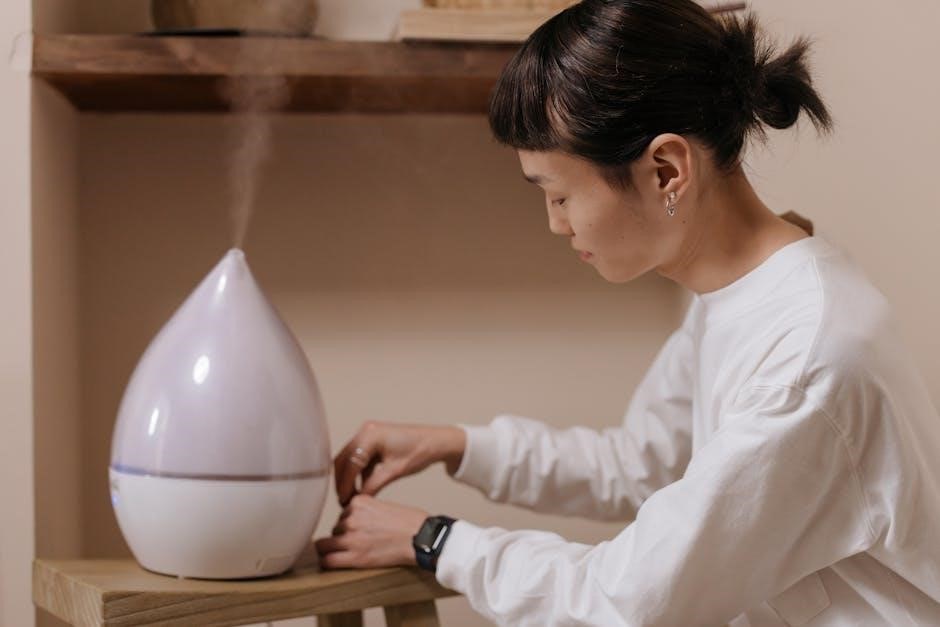
Honeywell’s cool mist humidifiers, such as the Designer Series, are ideal for those preferring a non-heated mist. These models utilize evaporation or ultrasonic technology to disperse a refreshing, cool moisture into the air, providing relief from dryness without raising room temperature.
They are particularly beneficial during warmer months or for individuals sensitive to warm air. Cool mist humidifiers are known for their quiet operation and energy efficiency, making them a popular choice for bedrooms and nurseries.
Regular cleaning is crucial to prevent bacterial growth within these systems.
Warm Mist Humidifiers
Honeywell warm mist humidifiers, like the HWM845 model, heat water to create steam, releasing a warm, soothing mist into the air. This type of humidifier can be particularly comforting during colder months, offering a gentle warmth alongside increased humidity.
The boiling process helps to kill bacteria and mold, potentially offering a more hygienic mist. Many warm mist models, such as the HWM845, also feature an essential oil cup, allowing for aromatherapy benefits.
However, caution is advised due to the hot water involved.
Whole-House Humidifiers (HE100, HE105, HE300 Series)
Honeywell whole-house humidifiers, including the HE100, HE105, and HE300 series, connect directly to your home’s HVAC system to humidify the entire living space. These models offer a significant advantage over portable units, providing consistent humidity throughout the house, eliminating the need for multiple devices.
Installation typically requires professional assistance. Owners manuals for these series (like the HE105A1000/U) are crucial for understanding operation and maintenance, though sometimes installers may provide the wrong manual initially.
Setting Up Your Honeywell Humidifier
Proper setup involves carefully filling the water tank and ensuring correct power connection for initial operation, as detailed in your humidifier’s user manual.
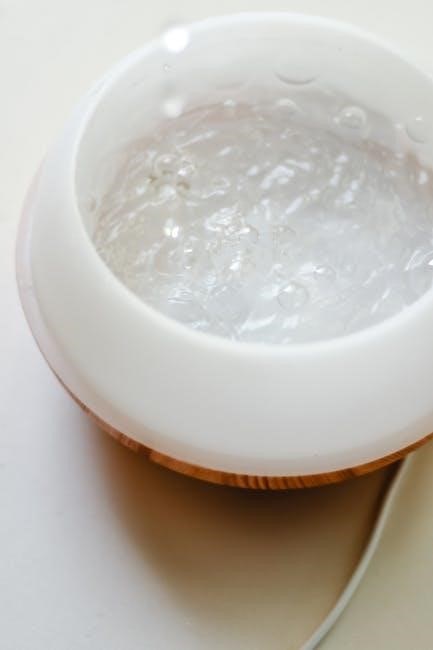
Filling the Water Tank
Before filling, always disconnect your Honeywell humidifier from the power outlet to ensure electrical safety. Locate the water tank, typically removable for easy access. Fill the tank with cool, distilled water – using tap water can lead to mineral buildup and reduce efficiency.
Avoid overfilling; adhere to the maximum fill line indicated on the tank. Some models may have a specific water level indicator. Once filled, securely replace the tank onto the humidifier base, ensuring a proper seal to prevent leaks. Regularly check the water level and refill as needed for optimal performance.
Powering On and Initial Operation
After filling the water tank and ensuring it’s securely in place, plug your Honeywell humidifier into a grounded electrical outlet. Most models feature a simple power button to initiate operation. Upon first use, allow approximately 15-20 minutes for the wick or filter to become fully saturated with water.
You may notice a slight mist output initially, which will increase as the humidifier primes. Select your desired humidity level using the control settings. Observe the unit for proper function and listen for quiet operation, as noted for the HWM845 model.

Operating Your Honeywell Humidifier
Honeywell humidifiers allow adjustment of humidity levels to suit your comfort, while select models, like the HWM845, feature an essential oil cup for aromatherapy.
Adjusting Humidity Levels
Honeywell humidifiers often feature variable humidity control settings, allowing you to customize the moisture output to achieve optimal comfort. Begin with a lower setting and gradually increase it until you reach your desired humidity level.
Maintaining humidity between 30-50% is generally recommended for a healthy indoor environment. Using a hygrometer can help you accurately monitor humidity levels.
Consider the room size and environmental factors when adjusting settings; larger spaces or drier climates may require higher output. Regularly monitoring and adjusting ensures efficient operation and prevents over-humidification, which can lead to condensation and mold growth.
Using the Essential Oil Cup (HWM845 Model)
The Honeywell HWM845 warm mist humidifier includes a dedicated essential oil cup for aromatherapy benefits. To use, simply add a few drops of your preferred essential oil directly into the cup.
The warm mist gently disperses the oil’s fragrance throughout the room, creating a relaxing and soothing atmosphere.
Ensure the oil doesn’t come into direct contact with the humidifier’s plastic components, as some oils may cause damage. Regularly clean the essential oil cup to prevent buildup and maintain optimal performance.

Maintenance and Cleaning
Regular cleaning is crucial for optimal performance and longevity. Consistent descaling prevents mineral buildup, ensuring your Honeywell humidifier operates efficiently and hygienically.
Regular Cleaning Schedule
To maintain peak performance and prevent the growth of bacteria and mold, a consistent cleaning schedule is essential for your Honeywell humidifier. Daily, empty and thoroughly rinse the water tank to remove any standing water. At least once a week, disassemble and wash the tank, humidifier base, and any removable parts with a mild soap and water solution.
Rinse completely to remove all soap residue. A deeper cleaning, including descaling (addressed separately), should be performed every 1-3 months, depending on water hardness and usage frequency. Always unplug the humidifier before cleaning and ensure it is completely dry before reassembling and operating.
Descaling the Humidifier
Over time, mineral buildup from hard water can accumulate inside your Honeywell humidifier, reducing its efficiency. Descaling removes this buildup. Fill the water tank with a mixture of equal parts white vinegar and water. Let it sit for at least 30 minutes, or up to several hours for heavy scaling.
After soaking, empty the tank and rinse thoroughly with clean water until the vinegar smell is gone. Repeat the rinsing process several times. This process helps restore optimal mist output and prolongs the life of your humidifier;

Troubleshooting Common Issues
If your Honeywell humidifier isn’t working, check the power connection and water levels first. Low mist output often indicates mineral buildup needing descaling.
Humidifier Not Turning On
First, ensure the humidifier is properly plugged into a functioning electrical outlet. Verify the outlet is receiving power by testing it with another device. Next, check the power cord for any visible damage, such as cuts or fraying, and replace it if necessary.
Confirm the humidifier’s internal reset button, if equipped, has been pressed. Some models feature an automatic shut-off when the water tank is empty; refill the tank and try again. Finally, consult the user manual for specific troubleshooting steps related to your Honeywell model, as certain units may have unique power-related features or indicators.
Low Mist Output
If your Honeywell humidifier produces insufficient mist, begin by verifying the water tank is adequately filled. Ensure the tank is correctly seated and sealed to prevent leaks and maintain proper operation. Next, inspect the mist outlet for any obstructions, such as mineral buildup or dust accumulation, and gently clean it.
Regular descaling, as outlined in the user manual, is crucial to remove mineral deposits that can restrict mist flow. Confirm the humidity setting is appropriately adjusted for your desired output level. Finally, check the air filter (if applicable) and replace it if dirty.

Safety Precautions
Always prioritize electrical safety and use clean water in your Honeywell humidifier. Disconnect before cleaning, and follow all guidelines in the user manual.
Electrical Safety
To ensure safe operation, always unplug your Honeywell humidifier before filling, cleaning, or changing filters. Never operate the humidifier with a damaged cord or plug; immediate replacement is crucial. Avoid using extension cords, and if absolutely necessary, ensure it’s a heavy-duty cord rated for the humidifier’s wattage.
Do not insert any object into the humidifier’s vents. Keep the humidifier away from water sources and avoid operating it in excessively humid environments like bathrooms during showers. Regularly inspect the power cord for any signs of wear or damage, and discontinue use if issues are detected. Following these precautions minimizes electrical hazards.
Water Quality and Usage
Utilize distilled or demineralized water in your Honeywell humidifier to minimize mineral buildup and prolong its lifespan. Tap water can contain minerals that create white dust and reduce efficiency. Regularly empty and thoroughly clean the water tank, even when not in use, to prevent bacterial growth.
Avoid adding any chemicals, fragrances, or medications to the water unless specifically instructed by Honeywell. Only use clean, potable water sources. Discard any unused water remaining in the tank after prolonged periods to maintain optimal hygiene and performance.
Honeywell Humidifier Model Numbers & Resources
Understanding your Honeywell humidifier’s model number, like HE105A1000/U, is key to finding the correct user manual and support resources online.
Understanding Model Numbers (HE105A1000/U)
Honeywell humidifier model numbers contain vital information for identifying your specific unit and accessing the correct resources. For example, HE105A1000/U signifies a particular configuration within the HE105 series of whole-house humidifiers. The letters and numbers detail features, voltage, and production variations.
Knowing this code is crucial when searching for replacement parts, troubleshooting guides, or the official user manual. Manufacturers use these identifiers to ensure compatibility and accurate support. Referencing the model number guarantees you’re receiving information tailored to your humidifier, maximizing its performance and lifespan.
Finding User Manuals Online
Locating your Honeywell humidifier’s user manual online is straightforward. Start by visiting the official Honeywell website and navigating to their support section. Utilize the search function, entering your specific model number (e.g., HE105A1000/U) for precise results. Alternatively, a general web search including the model number and “user manual” will yield relevant links.
Retailer websites like Amazon and Target, where you may have purchased the unit, often host downloadable manuals. Ensure the manual corresponds to your exact model for accurate instructions and safety guidelines. Digital access provides convenient, readily available support.

Warranty Information
Honeywell humidifiers are backed by a warranty, details of which are found in your user manual or on the Honeywell support website.
Contacting Honeywell support is key for claims.
Honeywell Humidifier Warranty Details
Honeywell humidifier warranties typically cover defects in materials and workmanship for a specified period from the date of purchase. The length of coverage can vary depending on the specific model and region, so carefully reviewing your product’s documentation is crucial.
Generally, the warranty will cover repair or replacement of the defective unit, at Honeywell’s discretion. It’s important to retain your proof of purchase, as this will be required to make a warranty claim. Damage caused by misuse, abuse, or improper cleaning is usually excluded from warranty coverage. Always refer to the official warranty statement included with your humidifier for complete details and limitations.
Contacting Honeywell Support
Honeywell provides several avenues for customer support regarding their humidifiers. For immediate assistance, visiting the official Honeywell website is recommended, as it often features a comprehensive FAQ section and troubleshooting guides.
You can typically find a “Contact Us” page with options for phone support, email submission, or live chat. When contacting support, having your humidifier’s model number (like HE105A1000/U) readily available will expedite the process. Online resources, including downloadable user manuals, are also easily accessible through their website, offering self-service solutions to common issues.